
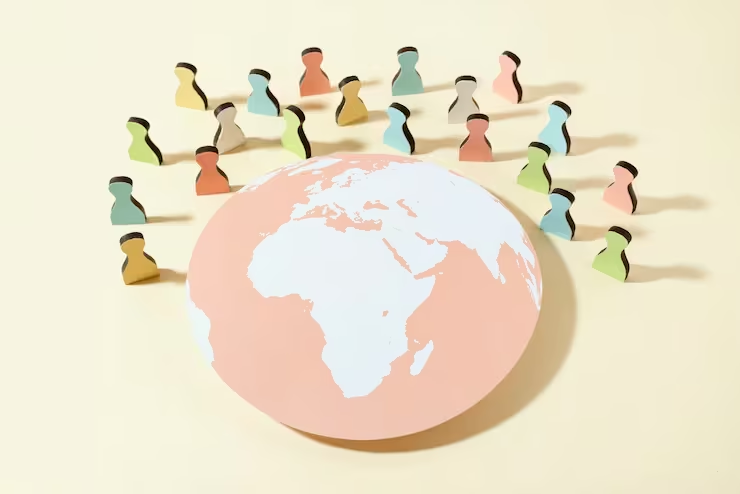
The world is more interconnected than ever. Thanks to technological advancements and globalization, the way business operates has drastically transformed over the last two decades. Companies are no longer confined to their local markets; instead, they have access to a global customer base, diverse talent pools, and international supply chains. This article explores what it means to run a business in today’s global economy, highlighting both the opportunities and challenges.
1. The Shift Toward Global Business Models
With the rise of e-commerce and digital communication, businesses of all sizes are expanding their reach. Startups in one country can target customers on the other side of the world within days. Cloud technology, global marketplaces, and remote work tools have enabled businesses to scale quickly without the need for heavy infrastructure.
Example: A small apparel brand in Texas can now source fabrics from India, manufacture in Vietnam, and sell through Amazon to customers in Germany.
2. The Importance of Cultural Intelligence
Operating internationally demands more than logistics. Cultural differences can impact everything from marketing messaging to management styles. Businesses must invest in cultural training and hire locally knowledgeable talent to avoid missteps.
Case Study: McDonald’s localized its menu in India to exclude beef products, respecting local religious practices. This adaptation was key to its success in the region.
3. Compliance and Regulation Across Borders
Doing business globally means navigating a complex web of regulations. From tax codes to data privacy laws (like GDPR), compliance is critical. Companies must consult legal experts in international business law and create flexible policies that adapt to regional rules.
4. Building Resilient Supply Chains
Global business success depends heavily on logistics. As seen during the COVID-19 pandemic, supply chain disruptions can cripple entire industries. Modern businesses are now focusing on building diversified and resilient supply chains to mitigate risk.
Tip: Diversify suppliers, build in buffer stock, and invest in supply chain management technology.
5. Digital Transformation and Innovation
In a global economy, speed and innovation are the currency. Businesses must embrace digital tools, from AI-driven analytics to automation in logistics, to remain competitive. Digital-first companies tend to scale faster and adapt more easily to change.
Conclusion
To thrive in today’s global economy, businesses must embrace complexity. Understanding cultural nuances, staying compliant, investing in digital tools, and building resilient systems are all part of the modern business playbook.
https://shorturl.fm/Wr3Xw
https://shorturl.fm/gEup7
https://shorturl.fm/IVXOc
https://shorturl.fm/jw1bp
Share your unique link and earn up to 40% commission!
Turn your traffic into cash—join our affiliate program!